

Private collector
Rome, Lazio, Italy
The large bronze sculpture built by John Vassar House (JVH) commemorating the Boston Tea Party is “Square Rigger”, installed in 1974 for the State Street Bank in Quincy, MA. (search “Square Rigger” year 1974).
See https://www.johnvassarhousesculptor.art/ Square Rigger year 1974.
In year 1971 sculptor (JVH) created two different wave bronzes named “Boston Tea Party” for the bi-centennial anniversary of the protest.
The two models allow us to appreciate how JVH revisited the form and movement of the first model during the same year.

The two “Boston Tea Party” wave sculptures commemorate the bi-centennial of the protest that took place on Dec. 16, 1773.
On this occasion 3 ships (square riggers) carrying cargoes of the East India Company were boarded when moored in Boston Harbor and their tea crates thrown into the waters to ensure the destruction of their contents.

In JVH’s perspective, the act of dumping the chests of tea into the waves best commemorates the protest.
JVH in fact, relies on the abstract movement of the waves and the abstract forms of the emptied crates sinking into the water.
This provides strong sculptural action to represent the destruction of the cargo during protest (BOSTON TEA PARTY).
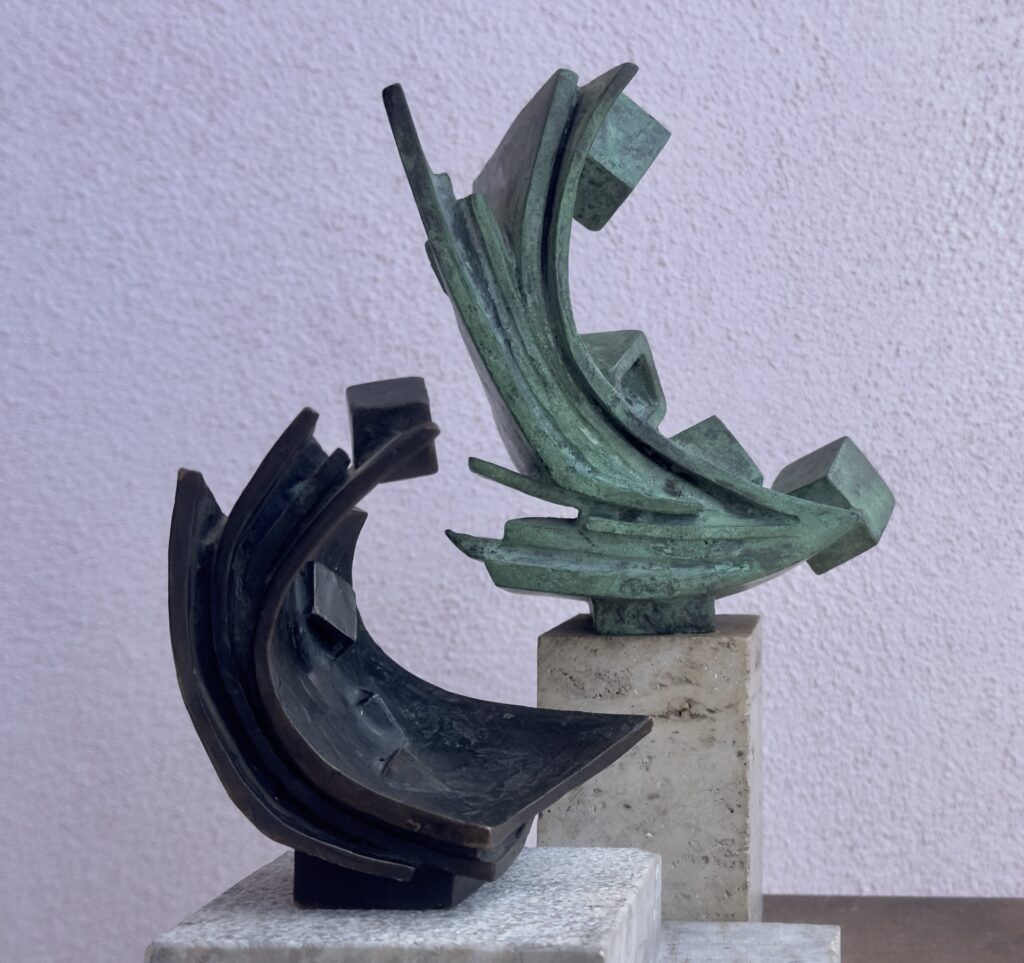
Both sculptures represent moving sinking cubes (crates or chests of tea) borne on ripples, swells and curls aiming to represent the total destruction of the cargo.
JVH depicts the very last moments, afloat, before the cargo is completely submerged.
The black patina “Boston Tea Party” model was cast before the green patina “Boston Tea Party”, about half a year before.

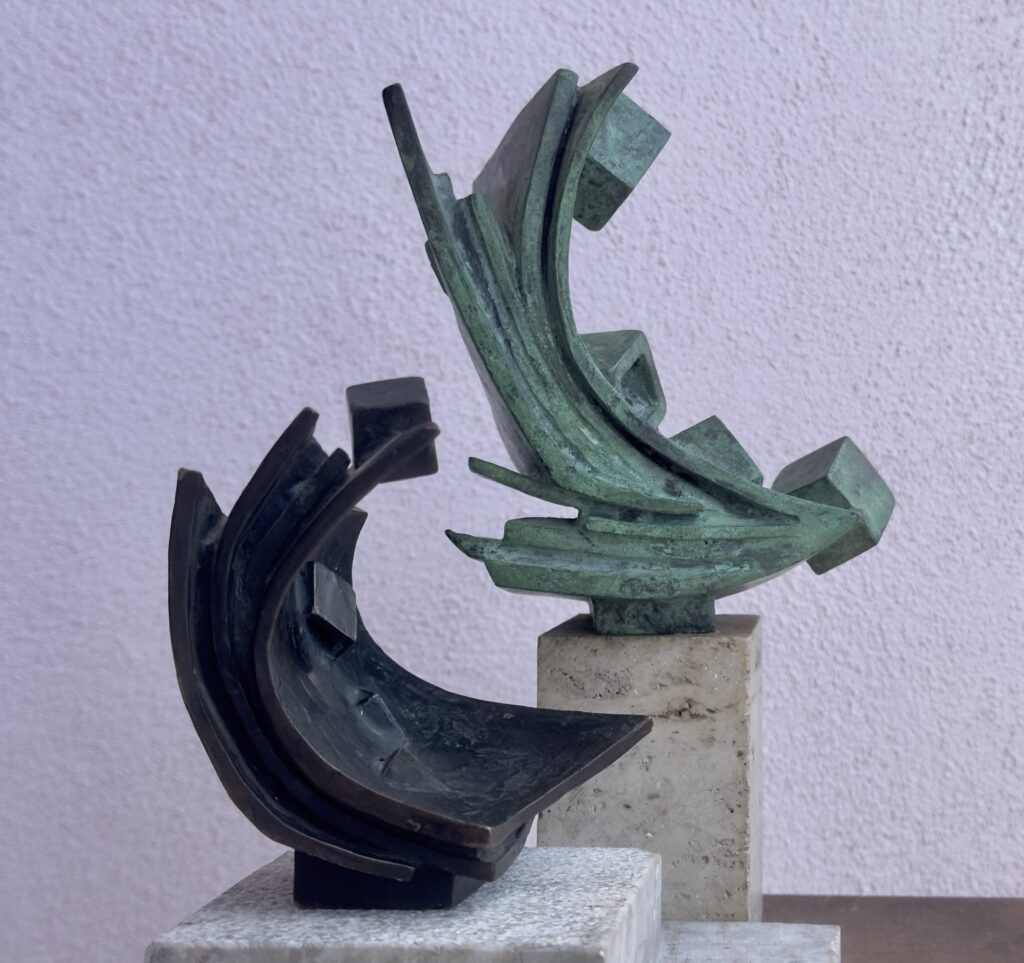
Here we are analyzing the wave shape detail improvements:
– The black wave laminations are thin and very curved;
– The green wave laminations are thick and hefty to create mass to add horizontal wedge forces.

Here we are counting the number of crates (chests) on each wave:
The black wave carries 4 crates (an even number of crates) on a right-to-left diagonal with the wave;
The green wave instead carries 5 crates (an uneven number of crates) all in disarray, on a left-to-right diagonal with the wave. In this sculpture the positioning of the crates is also more crowded.
Now we are analyzing the upper positioning of the crates:
– The black wave upper crate is positioned too high and stable while;
– The green wave upper crate reflects imbalance, toward the precipice.

We are now looking at the lower positioning of the crates:
– In the black wave the crates are equally spaced;
– In the green wave the three central crates are almost touching each other and the front fifth crate is protruding outwards, already empty. The crates are on a diagonal line on the wave.

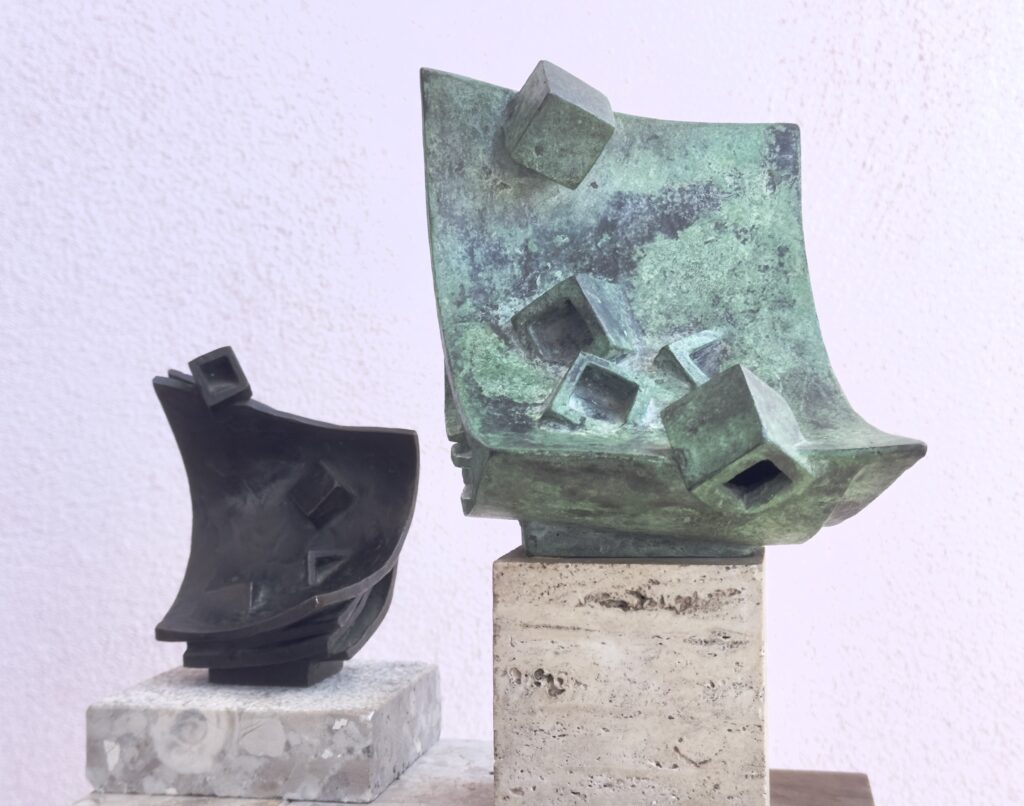
As for the wave imbalance, we notice that:
– In the black wave, the movement is vertically balanced;
– In the green wave, however, the lower wave width is pushing forward and off center to the right.

Analyzing the vertical balance and diagonal movement of the sculptures we intend that:
– The black wave is elegant and graceful, but not destructive, while
– The green wave shows a number of crates coming toward the viewer.


Observations on the side views of the sculptures are as follows:
– The black wave remains elegant and graceful;
– The green wave shows a massive surge of laminations emphasizing destruction by movement and form.
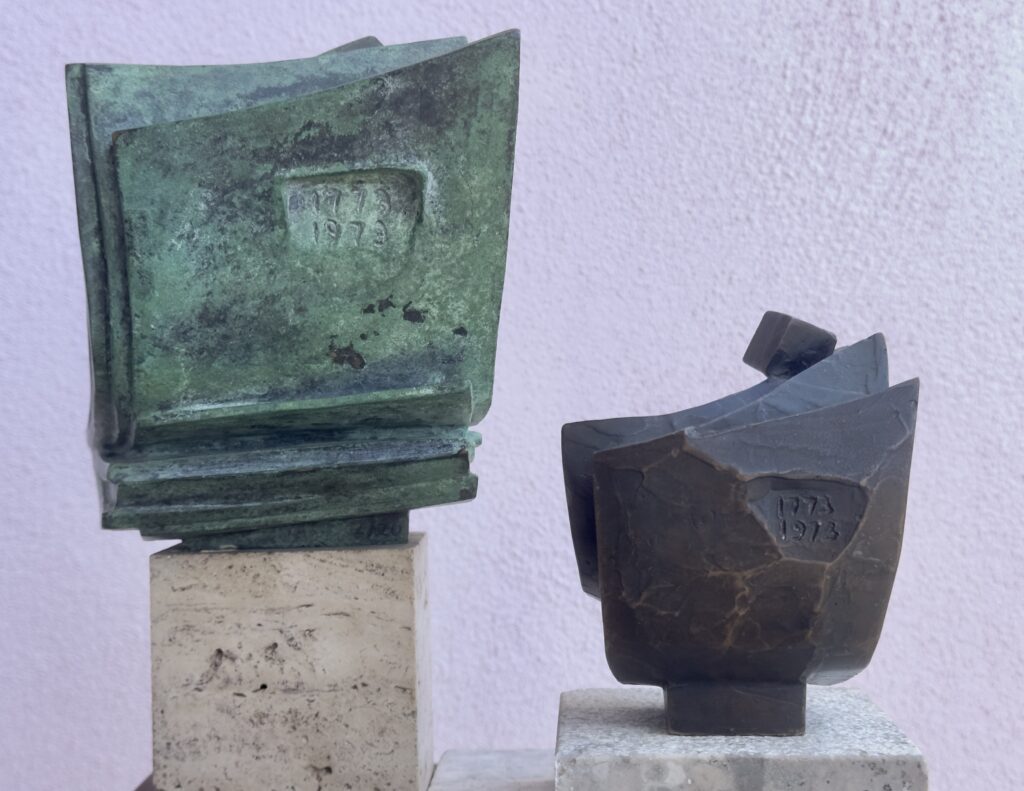

Viewing the sculptures from the rear:
– The black wave is elegant as it looks more like a sail rather than a wave;
– The green wave, instead, is overly heavy at the base to emphasize additional lower horizontal force in the shape of a wedge.