
John Vassar House (JVH), b. 1926 – d.1982, had a formal education, attending Harvard University and the Cranbrook Academy of Art. He was an independent American sculptor of the modern art movement, characterized by abstract forms. His career, spanning more than two decades, was marked by various styles and mediums, demonstrating his versatility and progression in abstract lost-wax bronze sculptures. His sculptures range from joined figurative to organic and abstract works, mainly monumental outdoor bronzes. In addition to his sculpting career, JVH also taught at various universities in different locations in the United States. In 1957 he established his primary studio in Rome, Italy.
JVH was heavily influenced by the cultural elements of his experiences, enabling him to fully express himself through the sculptural form which captures the essence of symbolism. In particular, Italy’s rich history, art, architecture, philosophy, literature, and nature profoundly impacted him. Here, he excelled in creating large wax models suitable for lost-wax casting techniques in bronze, ensuring that his hand-made texture remained intact on the bronze sculpture’s surface. He constructed the sculpture waxes to be cast in Italy, and subsequently shipped them primarily to the United States.
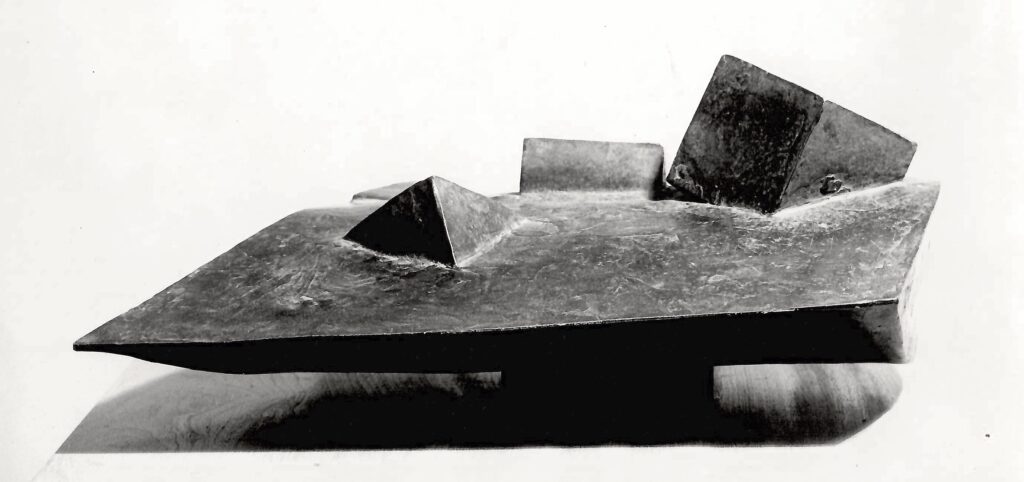
Events such as the 1966 devastating flooding of the Arno River in Florence deeply touched him and this influence is immediately reflected in his sculpture “Quattro Cubi Affondando” (Four Cubes Sinking). In this work, JVH depicts a single, large curving wave of the flood, with cubes sinking. The artistic simplicity of the forms conveys the immense power of nature and the profound sense of human hopelessness inherent in such a tragedy.
JVH maintained a constant awareness of cultural, scientific, social, and global affairs. His residence in Europe, particularly in Rome, afforded him a unique perspective on the gradual progress towards the consolidation process of the European Common Market and of the European Parliament. In recognition of these endeavors, he created two distinct sculptures, one in 1977 and the other in 1979.
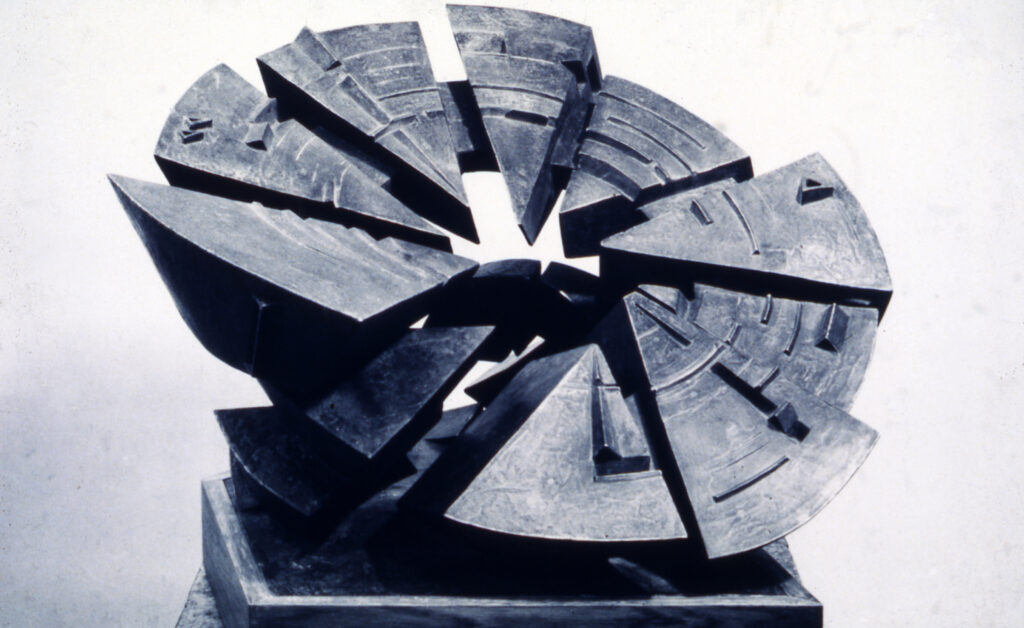
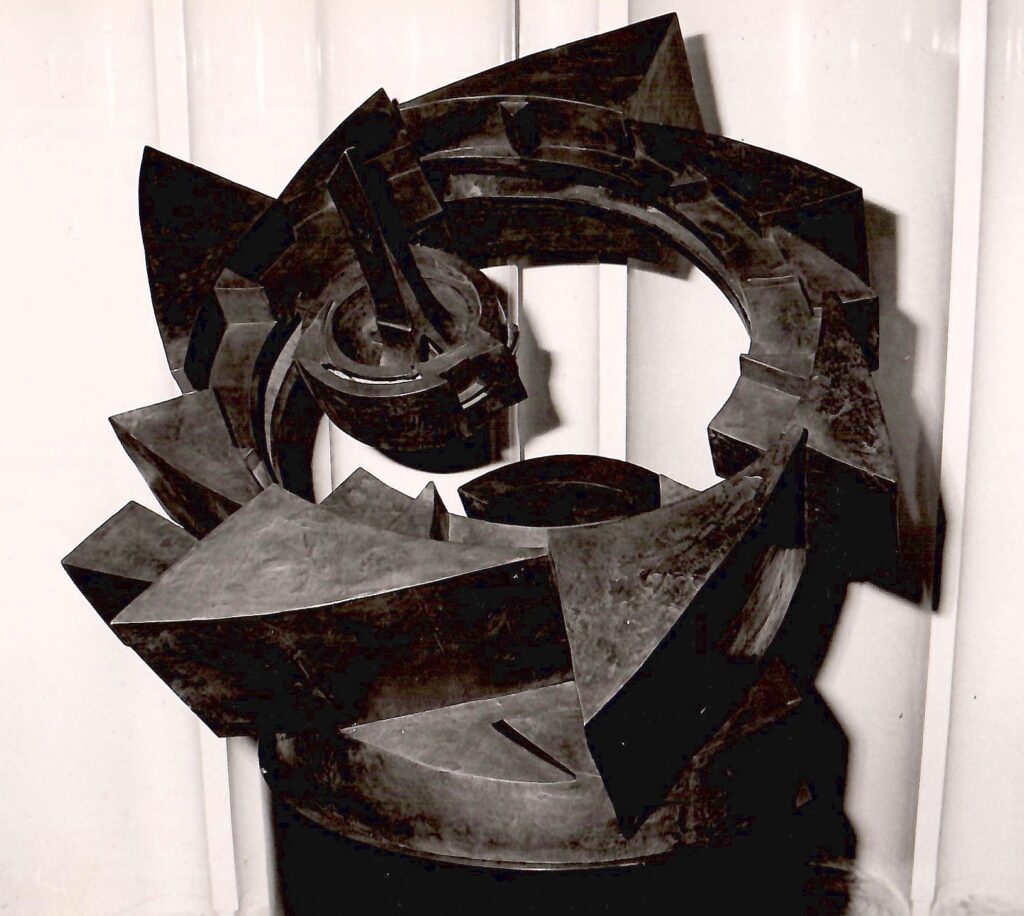
Both sculptures which are located in Brussels and Strasbourg, respectively, depict the status, uniqueness, and complexity of the European countries in achieving union, as well as the intricate political structures that were being established.
Although not always feasible, he envisaged his sculptures to harmonize with specific locations and settings.
His imposing outdoor bronzes stand tall with an initial captivating form and a strong direction. The light green bronze patina seamlessly blends into the surrounding outdoor landscape at all times of the day. As one approaches the sculptures and walks around them, the forms and movement of the metal shapes, sometimes curved, sometimes with sharp corners, can be discerned. Initially, the sculptures appear formal, somehow embodying a solemn unity of hollowness and thick metal, symbolizing eternal durability. However, in the attempt to relate to the forms, one appreciates how the vast form draws attention to the smaller, intricate details and movements. The effectiveness of JVH’s sculptures rests on their ability to convey his vision and resonating with the viewer.
Some highlights from the portfolio of more than 300 sculptures created by JVH, include:
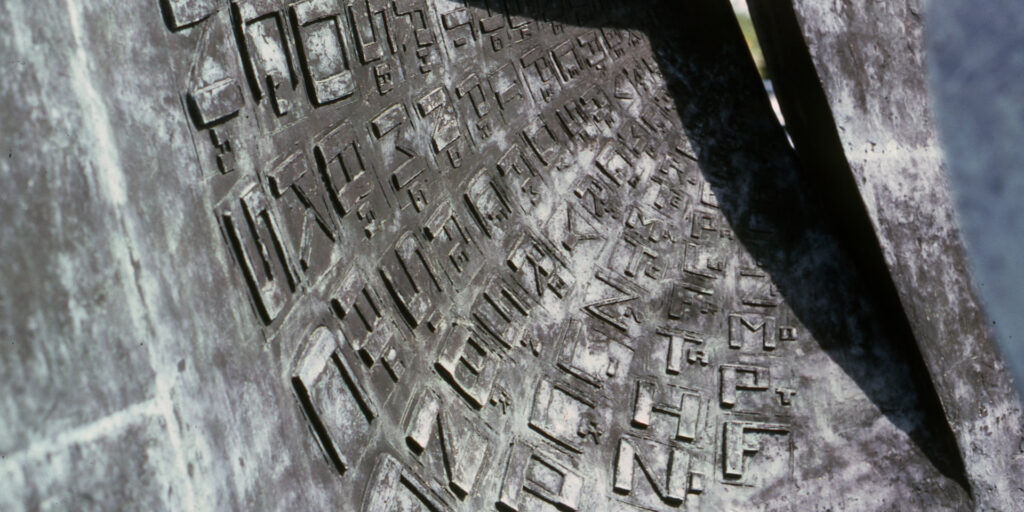
The Table of Elements, a walk-through sculpture, presents a progression of the chemical symbols, offering a glimpse into the future. The three-ton sculpture is composed of simple, powerful, multiple sheets, curved with space enough to walk between. When one enters the passageway between the forms, the eye is
led to a Table of Elements forming a sharply converging pattern of diminishing symbols leading the eye out to a slit that completely pierces the bronze. The slit, with light coming through, implies infinity.
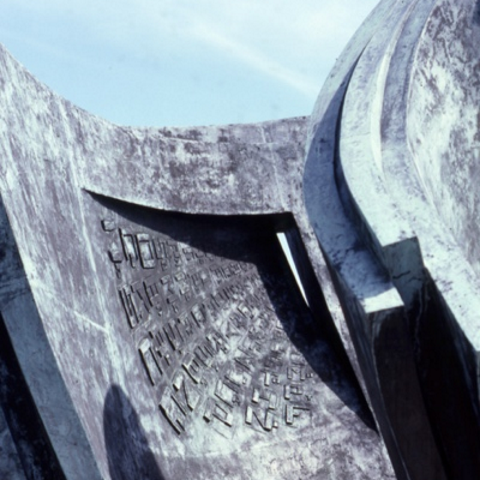
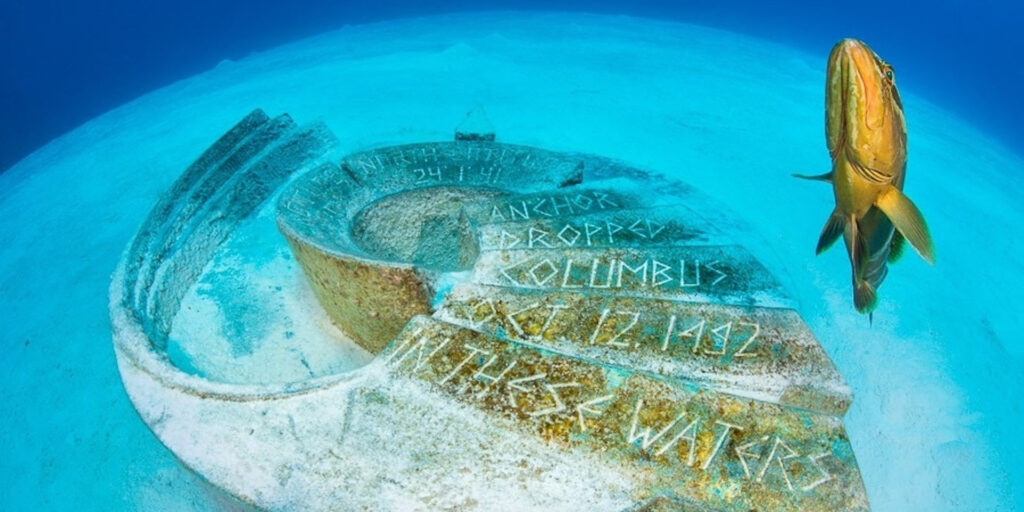
The Columbus Underwater Marker, an underwater monument commemorating and placed in the spot at San Salvador where Christopher Columbus dropped the anchor when reaching America in 1492, harmoniously blends historical significance with its location on a hydrodynamic form resembling a large shell.
The Square Rigger commemorates the 1773 Boston Tea Party through the distinctive shape of the ships’ sails. Created for the 200th anniversary of the event, the sculpture depicts three square-rigger ships. The upward progression of the sails represents historical events leading to American independence, with the evolution of coin reliefs and textures on the sails, symbolizing this vertical progression.
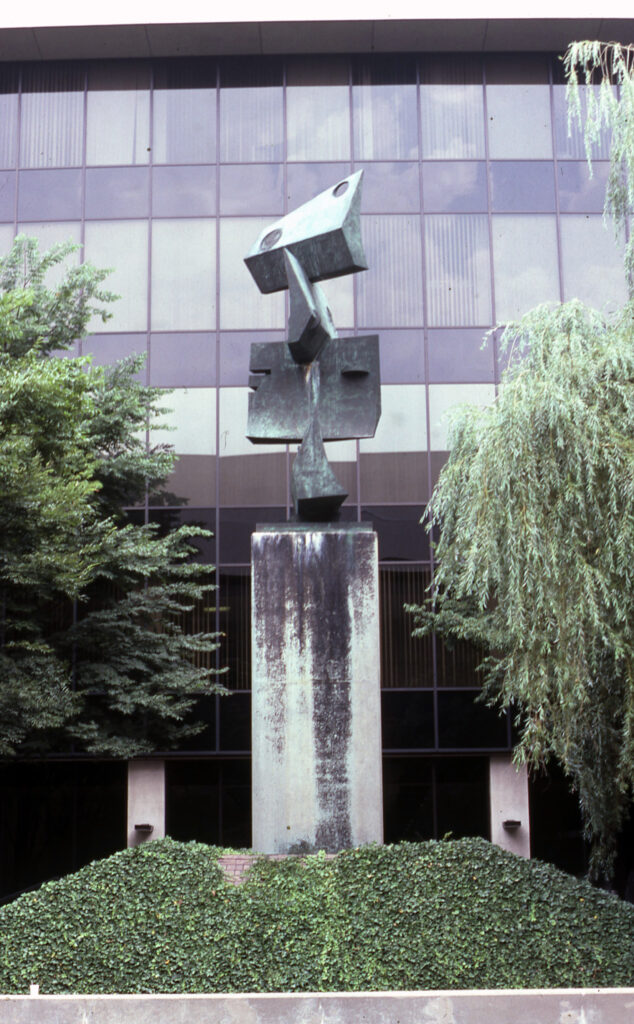
The Alexander Graham Bell sculpture commemorates the inaugural practical telephone call in 1875. This achievement was accomplished through the ingenious combination of coding and decoding transmitter and receiver devices for telecommunication. Notably, the words “Mr. Watson – come here – I want to see you” were transmitted through this device.
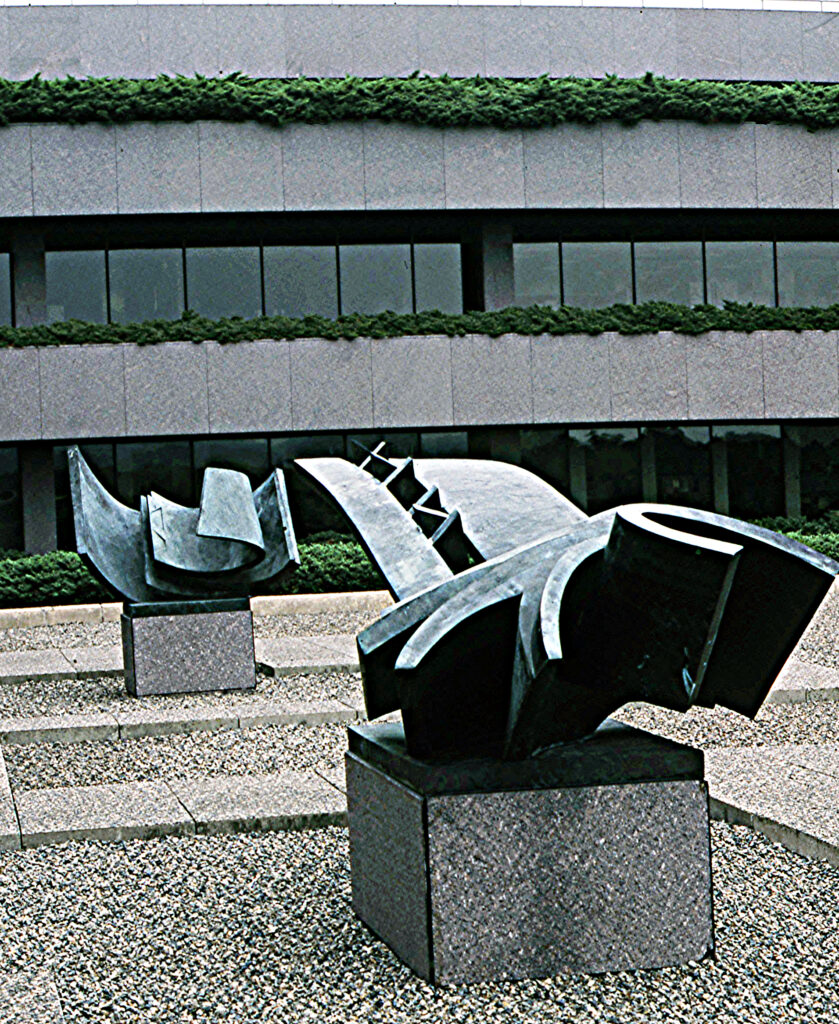
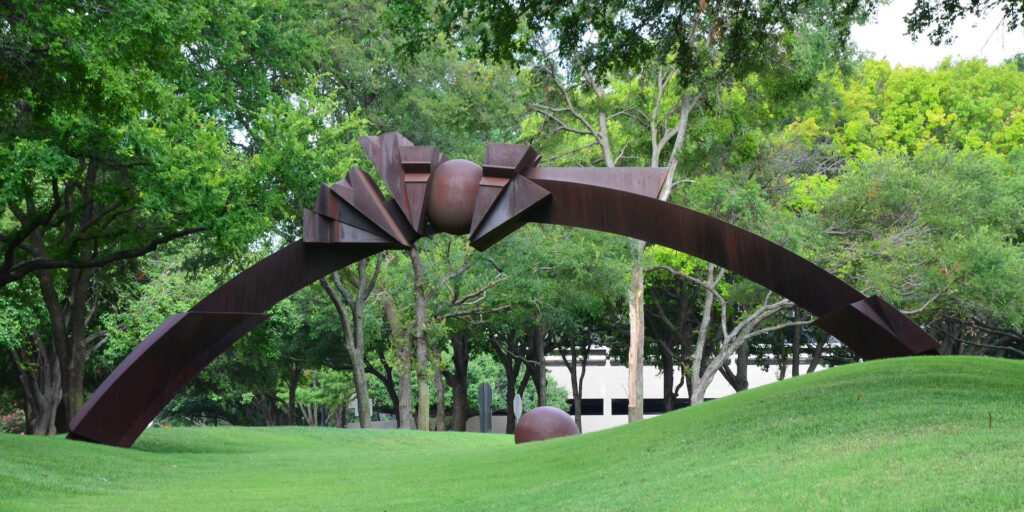
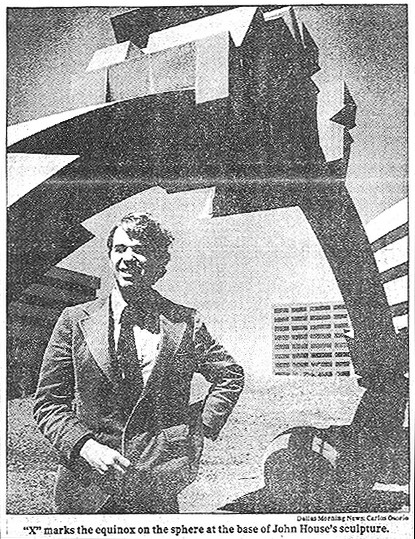
The final sculpture in 1980, Sun Up at Quorum, is a functional piece made in corten steel, in which twice a year the sun will strike the unique piece at a precise angle to direct a shaft of sunlight through an aperture onto a metal sphere embedded in the ground. More specifically, on or within 24 hours of the vernal equinox and the autumnal equinox, at the appointed minute, the sun passes through a slit in the rainbow arch and projects an “X” on the sphere. The arch compresses seven wedges, representing the visible planets, and a partial sphere, representing the sun, above a second sphere.
Overall, JVH’s extensive body of work encompasses commemorative bronzes, substantial bronze and steel corporate commissions, sculptures in university and museum collections, church commissions, and various acquisitions across different countries but mainly in the United States and Italy.
Additionally, a selection of his works are included in the online catalogue of the Smithsonian Institution.
His objective was to create large-scale sculptures. Initially he created meticulous and detailed black wax models so to accurately visualize the forms. Subsequently, these models were cast in bronze, most of which were also silver- plated. In some instances JVH would even cast multiple similar copies in order to select the most suitable one. This process enabled him to proportionally enlarge the final sculpture simultaneously.
All of JVH’s sculptures exhibit movement, asymmetry, and they all defy balance, capturing smaller counter movements to restore equilibrium. In some works in particular, one can discern vigorous strokes on the textured surface of the bronze, which impart scale and volume to the sculpture. Each of his sculptures possesses a unique, newly created narrative that serves as a source of inspiration, allowing for multiple imaginative interpretations. Each work has a distinctive meaning and rationale, symbolizing philosophical, natural, historical, political, technical, scientific, evolutionary, human motivations, and other subjects. His three-dimensional works of art, the lines, mass, volume, texture, planes, form, material, and structure generate in any viewer a vast range of concrete emotions and feelings.
October, 12 2025